
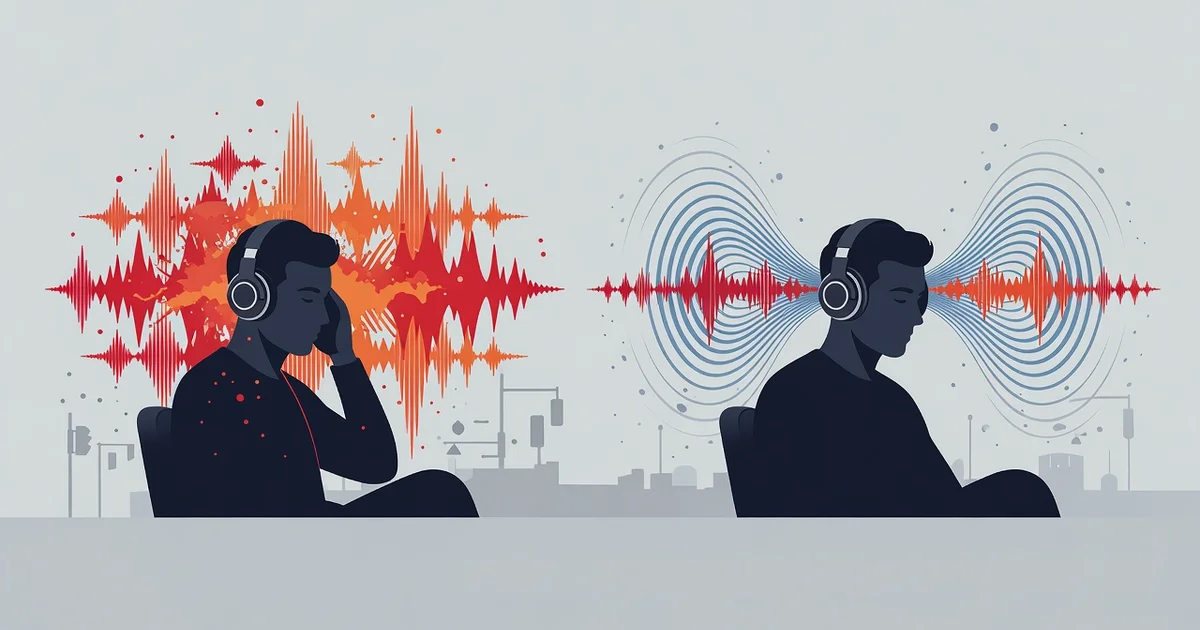
Imagine settling into a busy café or a crowded flight, only to find a pocket of near silence around you. That’s the everyday magic of noise cancellation technology, a feature now built into headphones, earbuds, and even car cabins. It actively reduces unwanted background sound so you can focus, relax, or hear what matters clearly.
In this article, we’ll explain how noise cancellation technology reduces background sound in plain terms. You’ll learn the difference between active and passive noise cancellation, see how each method works, and pick up practical tips for getting the best results from your own devices.
Noise cancellation technology has moved from high-end aviation headsets into everyday earbuds, over-ear headphones, and even car cabins. The core promise is simple: reduce unwanted background sound so you can focus, rest, or communicate more easily. But how does it actually work, and how can you get the most from it? This article explores how noise cancellation technology reduces background sound with clear, practical guidance you can apply immediately.
Introduction
Background noise is everywhere: traffic, HVAC hum, office chatter, airplane engines, and the low rumble of appliances. At low levels it is distracting; at high levels it can affect concentration, sleep, and even hearing health over time. Noise cancellation technology tackles this problem in two main ways: by physically blocking sound and by actively generating sound waves that cancel unwanted noise. Understanding the fundamentals helps you choose the right device, use it correctly, and set realistic expectations.
If you have ever wondered why some headphones silence a plane engine but still let you hear a baby crying, the answer lies in the type of noise and the limits of the technology. This guide breaks down the science, the practical steps, and the habits that lead to better long-term outcomes.
Key Concepts
To make sense of noise cancellation, start with a few foundational ideas.
- Sound is a wave: It travels through air as pressure variations. Every wave has an amplitude (loudness) and a phase (timing).
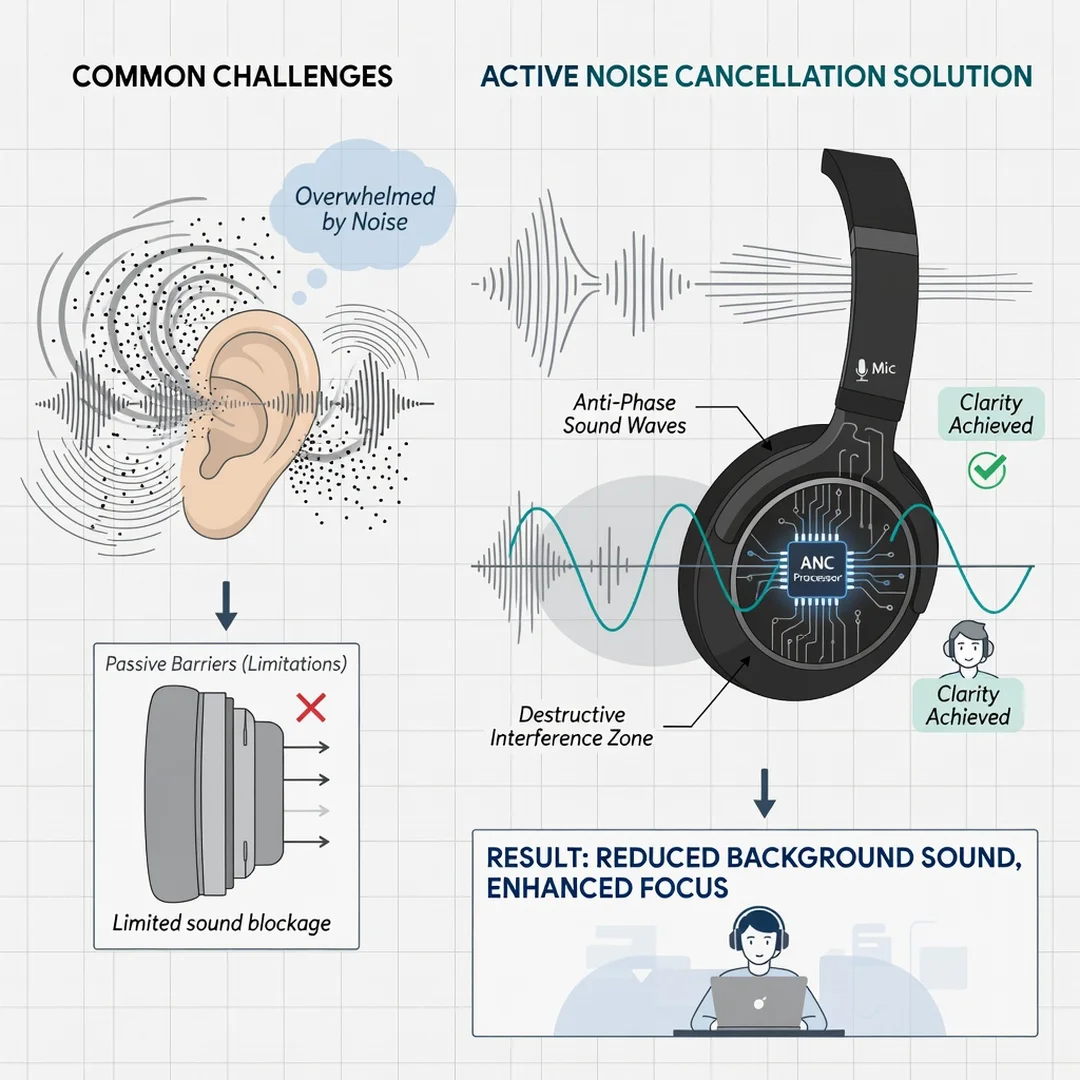
- Passive noise reduction: Physical barriers such as ear cup seals, foam tips, and dense materials block some sound. This works best for high-frequency sounds.
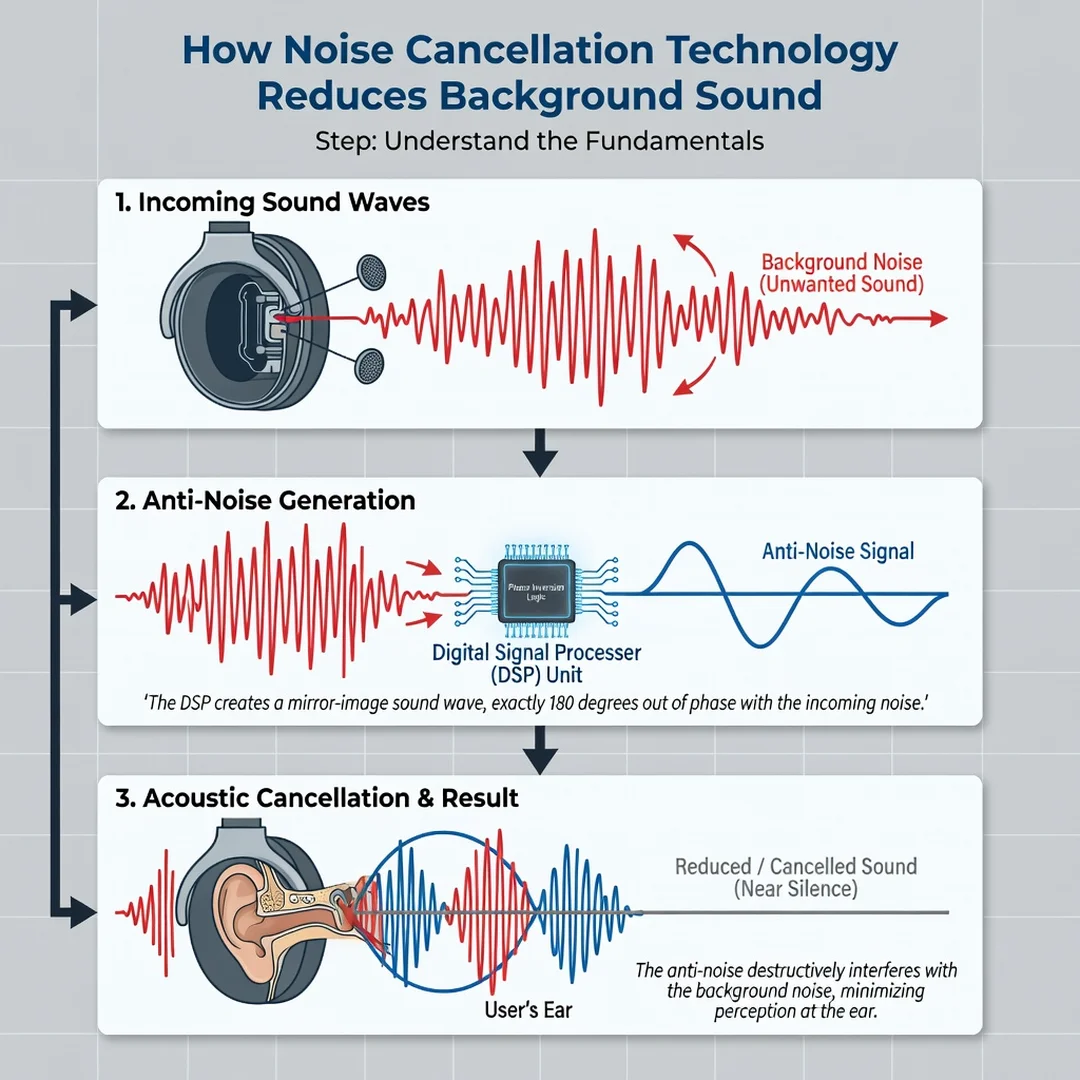
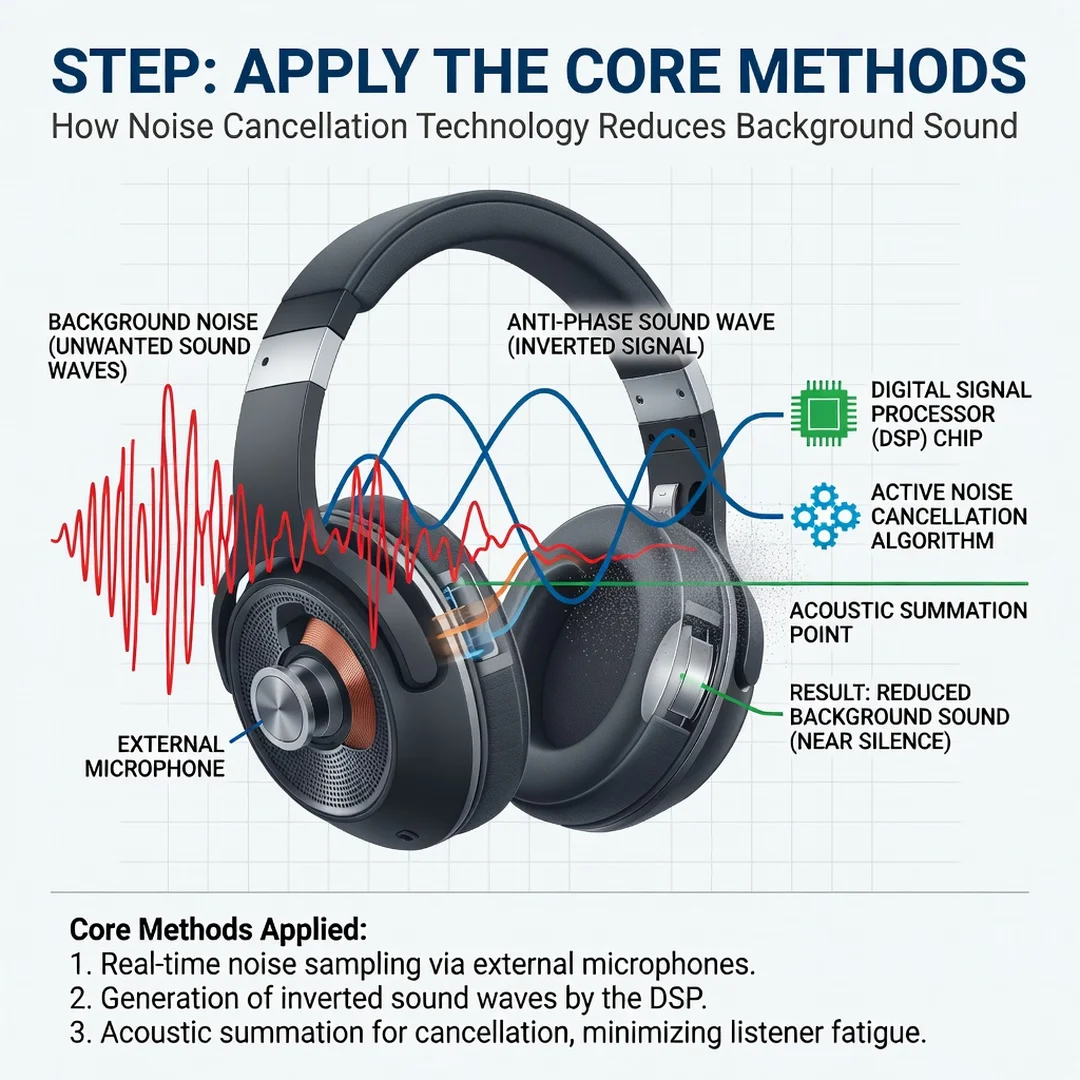
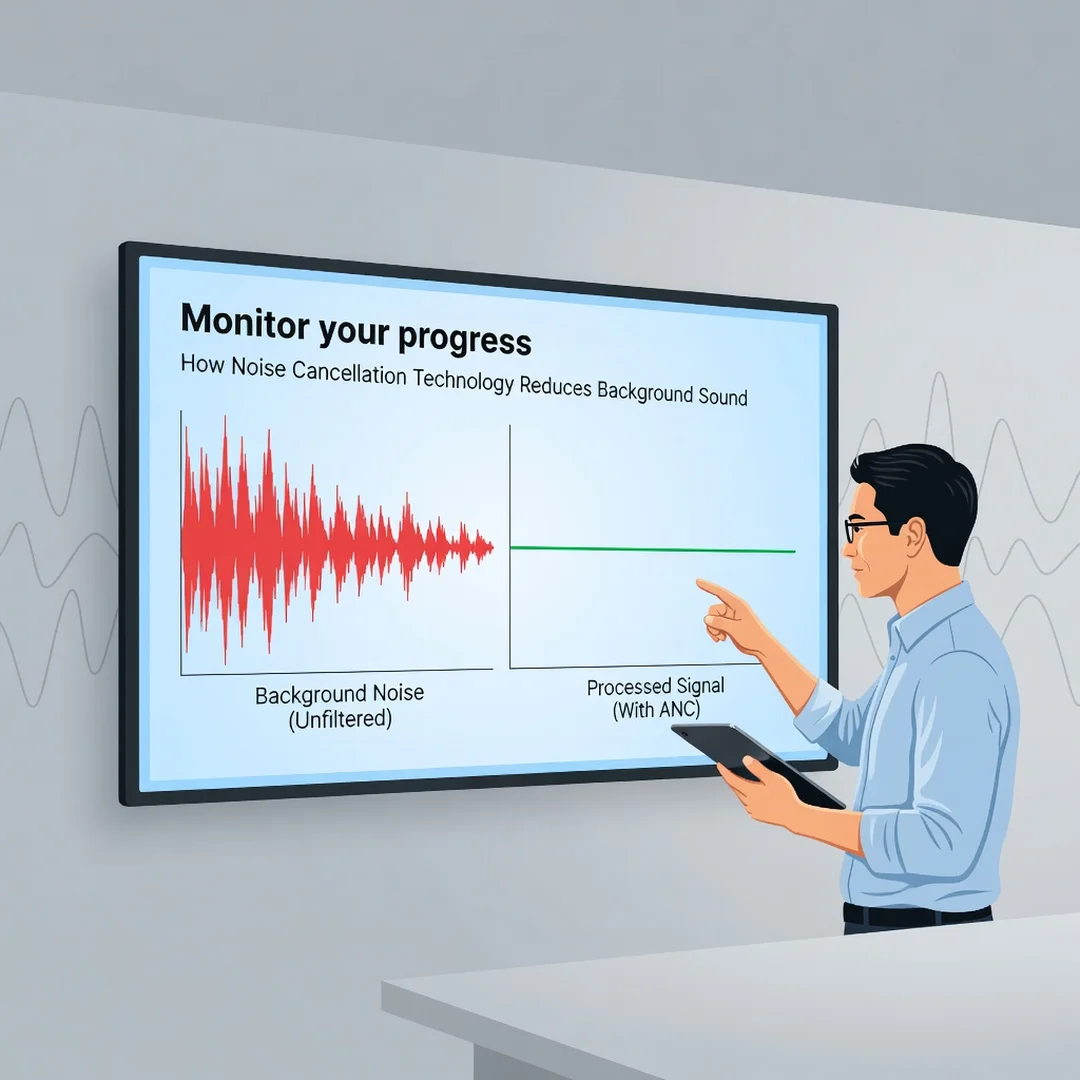
- Active noise cancellation (ANC): Microphones capture ambient sound, electronics invert the wave, and speakers play the inverted wave. When the original and inverted waves meet, they cancel out—a process called destructive interference.
- Feedforward vs. feedback: Feedforward ANC uses microphones outside the ear cup to catch noise before it reaches you. Feedback ANC uses microphones inside to measure what remains. Many devices combine both.
- Frequency limits: ANC is most effective on steady, low-frequency sounds (20–1,000 Hz). It is less effective on sudden, high-frequency sounds like speech or a dog bark.
- Transparency mode: The opposite of ANC—microphones pipe outside sound in so you can hear conversations or traffic.
Understanding these fundamentals helps you make informed decisions about which device fits your environment and your goals.
Deep Dive
Let’s look closer at the mechanics and the real-world factors that determine how much background sound actually gets reduced.
The physics of destructive interference
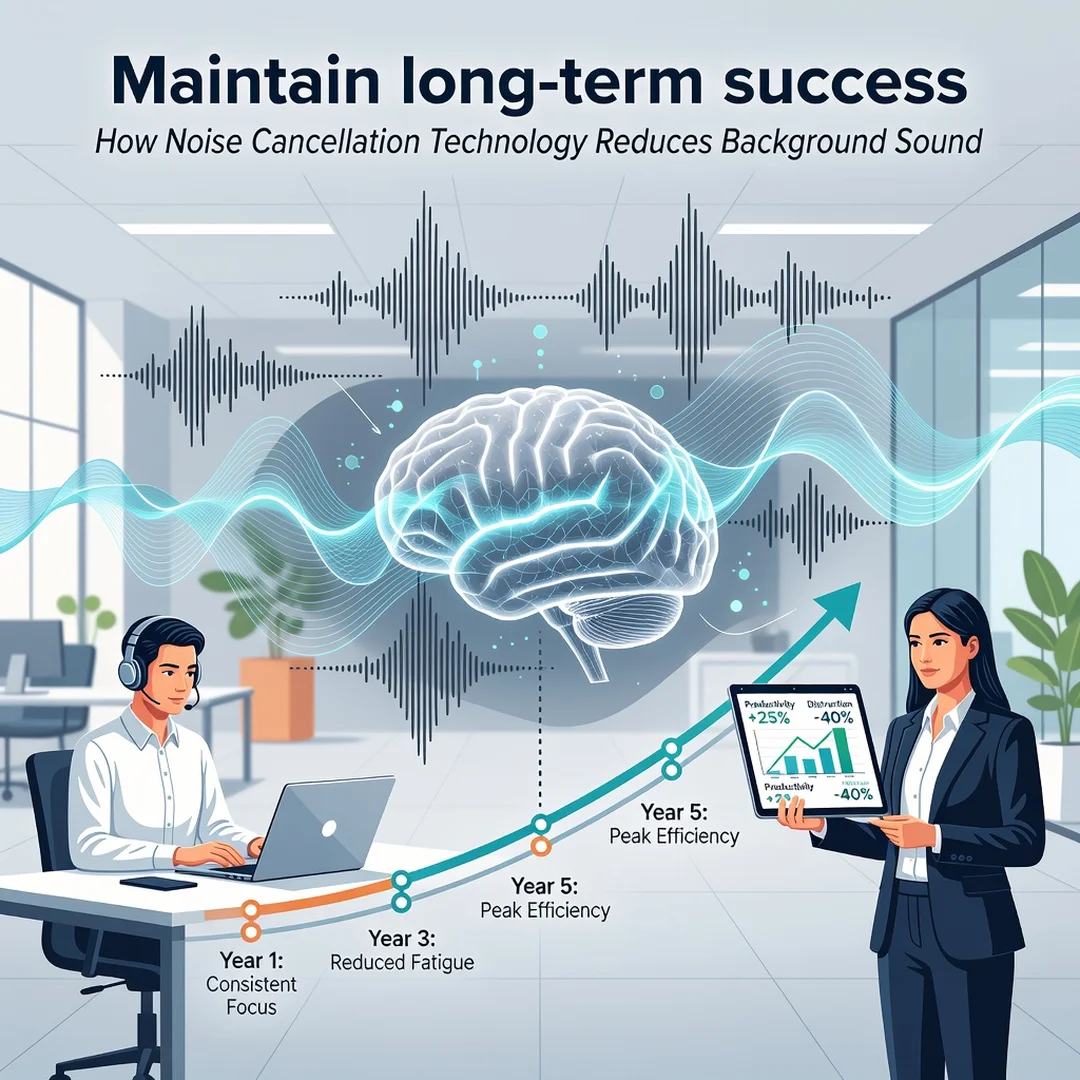
Imagine two identical waves. If you flip one upside down and align it with the other, their peaks and troughs cancel. ANC circuits do this in real time, sampling ambient noise thousands of times per second. The result is a quieter listening experience, but only within the frequency range the system can handle. Low-frequency hum—like a jet engine or a fan—has long, predictable waves that are easy to invert. High-frequency sounds change too quickly for current consumer electronics to cancel reliably.
Hardware matters as much as algorithms
Microphone placement, processor speed, and ear cup design all affect performance. A strong seal around your ears or ear canals is critical. If sound leaks in, ANC has to work harder and may still fail. That is why fit is often more important than the number of microphones advertised.
What ANC cannot do
ANC is not a magic silence button. It reduces constant low-frequency noise well, but it does not eliminate all sound. Sudden noises, voices, and high-pitched sounds often remain audible. Some people also experience a slight pressure sensation or mild nausea when ANC is active, especially in cheaper models.
ANC vs. noise isolation
Noise isolation (passive) relies on materials. Noise cancellation (active) relies on electronics. The best results come from combining both: a well-sealed headphone with good ANC. For very loud environments, ANC headphones with a tight seal outperform earbuds with ANC alone.
Battery and audio quality trade-offs
ANC consumes power. Turning it on can reduce battery life by 20–50% depending on the device. Some listeners also notice a slight change in audio fidelity when ANC is active, though modern models have minimized this.
Best Practices
Get the most from your noise cancellation by following these practical habits.
- Prioritize fit: Try multiple ear tip sizes or adjust the headband. A proper seal is the single biggest improvement you can make.
- Match the mode to the environment: Use full ANC on planes and trains, transparency mode in busy streets or offices where you need awareness.
- Clean microphones and vents: Dust and earwax can degrade performance. Wipe them gently with a dry cloth.
- Update firmware: Manufacturers often improve ANC algorithms through software updates.
- Take breaks: If you feel pressure or ear fatigue, remove the headphones for a few minutes.
- Combine with passive protection: In extreme noise, use ANC headphones plus earplugs underneath if safe to do so.
- Test before you buy: If possible, try the device in a noisy setting. Online reviews help, but your ears are the final judge.
Reliable information and consistent habits lead to better long-term outcomes—not just for your listening experience, but for your hearing health.
Step-by-Step Guide to Reducing Background Sound
Follow these steps to systematically reduce background noise using noise cancellation technology.
Step 1: Understand the fundamentals
Before you buy or adjust anything, learn the difference between passive isolation, active noise cancellation, and transparency mode. Know that ANC works best on low-frequency, steady sounds. This prevents frustration when a device cannot silence a nearby conversation. Read the manual or a trusted guide to understand what your specific device can and cannot do.
Step 2: Assess your starting point
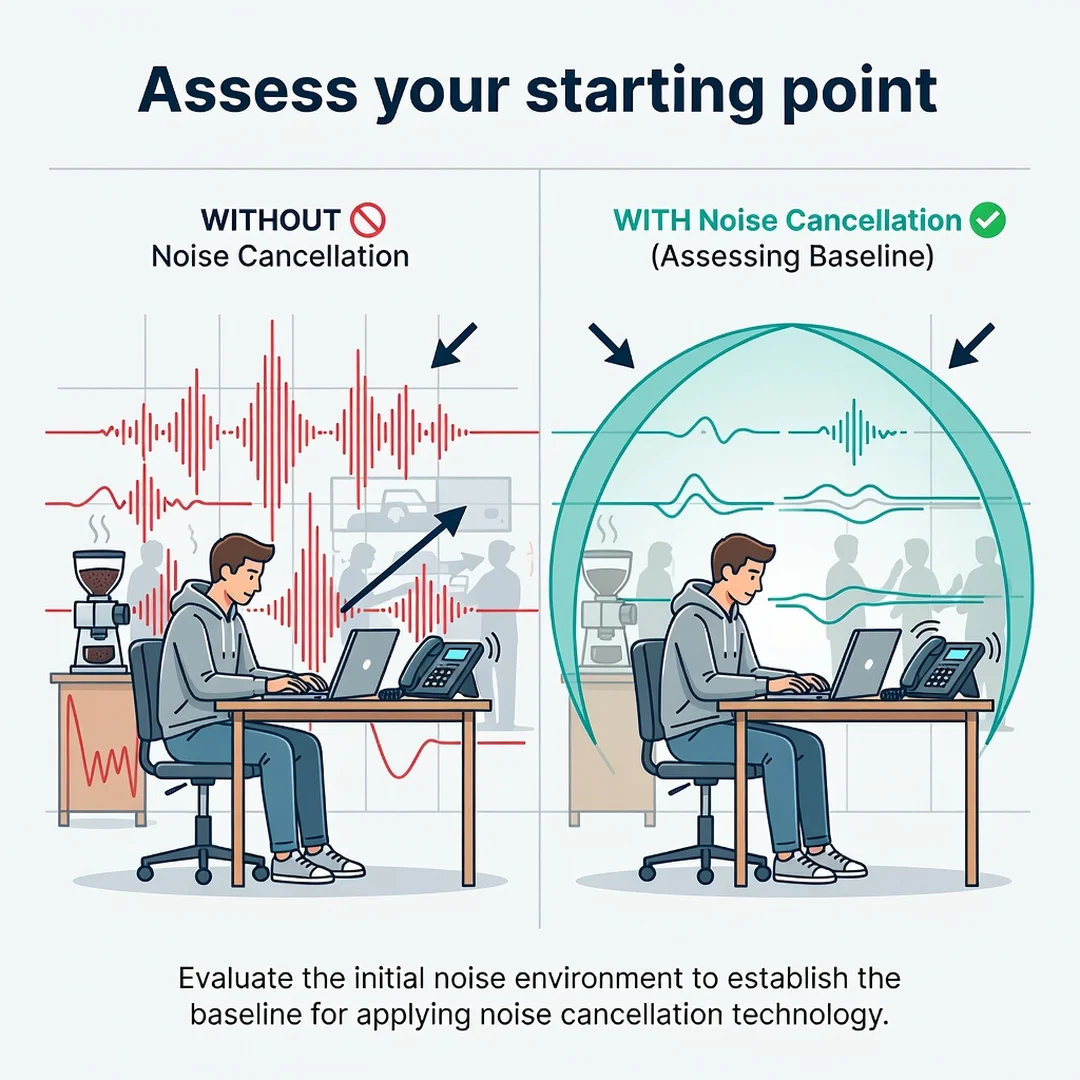
Identify the main sources of background noise in your daily life. Is it traffic, office chatter, a noisy HVAC system, or an airplane cabin? Note the frequency and consistency. Steady rumbles are easier to cancel than intermittent voices. Also assess your current gear: do your headphones seal well? Are the ear tips worn out? A quick assessment tells you where to focus your effort and budget.
Step 3: Set clear goals
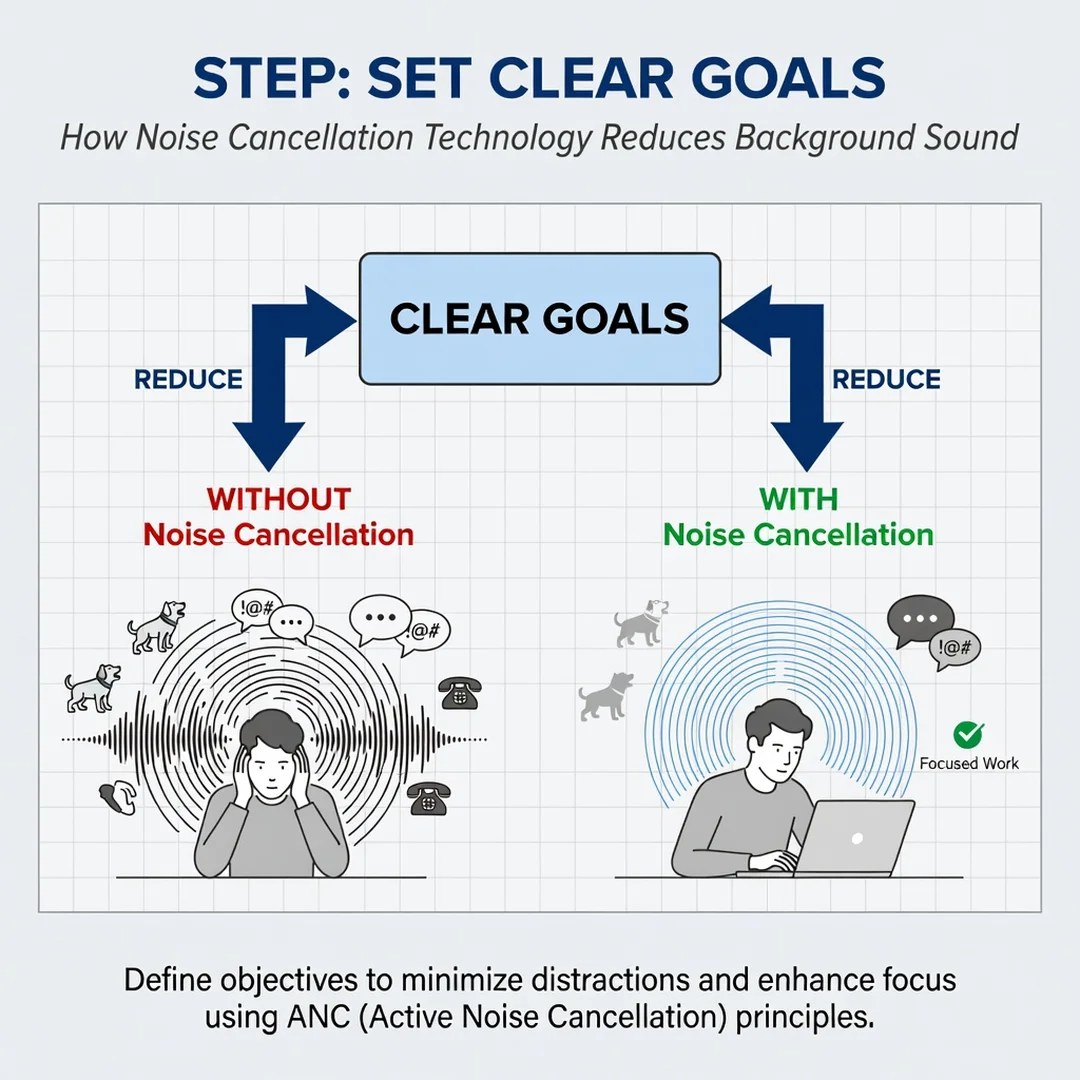
Decide what success looks like. Do you want to concentrate on work for two hours without distraction? Sleep better on a flight? Hear your music at a lower volume? Write down a specific, measurable goal. For example: “Reduce perceived airplane engine noise so I can listen at 50% volume instead of 80%.” Clear goals help you choose the right device and settings.
Step 4: Gather necessary resources
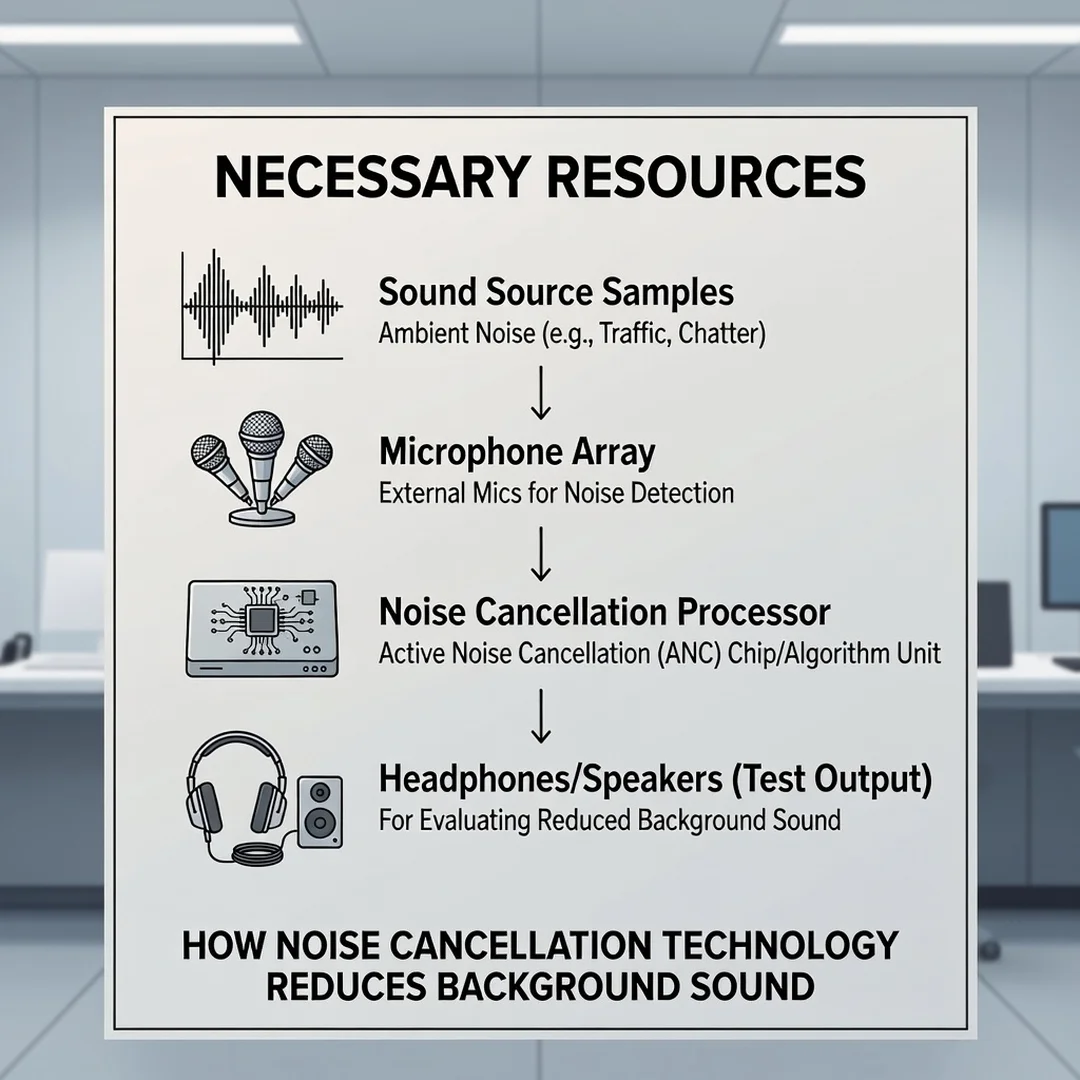
You may need a few items to get started:
- A device with active noise cancellation (headphones or earbuds) that fits your ears well.
- Alternative ear tips or cushions if the stock ones do not seal.
- A quiet place to test and compare settings.
- Access to firmware updates via the manufacturer’s app.
- A notebook or note-taking app to track your observations.
If you are on a budget, prioritize fit and passive isolation first; even basic ANC can help when the seal is good.
Step 5: Apply the core methods
Now put the technology to work:
- Turn on ANC and adjust the level if your device offers adjustable cancellation.
- Play a consistent low-frequency sound (like a fan) and listen for the reduction.
- Switch to transparency mode to hear the difference and to stay aware when needed.
- Experiment with ear tip sizes until you find the best seal.
- Use ANC consistently in noisy environments to build the habit.
Remember that ANC reduces, not eliminates. Combine it with passive isolation for the best result.
Step 6: Monitor your progress
After a week, evaluate your experience. Are you able to focus longer? Is the noise less intrusive? Check for ear fatigue or pressure. Adjust your settings or consider a different device if results are poor. Keep a simple log of environments and outcomes. Consistent monitoring helps you refine your approach and get the most from the technology.
FAQ
What should I know about How Noise Cancellation Technology Reduces Background Sound?
You should know that ANC uses microphones and speakers to create destructive interference, primarily for steady low-frequency noise. It works best with a good seal and is less effective on sudden or high-frequency sounds. Battery life and audio fidelity may be affected. Understanding these limits helps you set realistic expectations and choose the right mode for each situation.
Who is this guide for?
This guide is for anyone who wants to reduce background noise for work, travel, study, or relaxation. It is suitable for beginners and for experienced users looking to improve their setup. No technical background is required—just a willingness to test, adjust, and monitor results.
Conclusion
Noise cancellation technology reduces background sound by combining passive isolation with active, wave-canceling electronics. It excels at steady low-frequency noise and works best when the device fits well. By understanding the fundamentals, assessing your environment, setting clear goals, and following the step-by-step methods above, you can create a quieter, more focused experience. Reliable information and consistent habits lead to better long-term outcomes, whether you are protecting your hearing, improving concentration, or simply enjoying a moment of calm.
Frequently Asked Questions
What should I know about How Noise Cancellation Technology Reduces Background Sound?
This guide covers the essentials of How Noise Cancellation Technology Reduces Background Sound with practical steps you can apply right away.
Who is this guide for?
Anyone looking for a clear, structured overview without unnecessary complexity.
You now have a solid foundation for How Noise Cancellation Technology Reduces Background Sound. Apply the best practices above and revisit this guide as your needs evolve.