
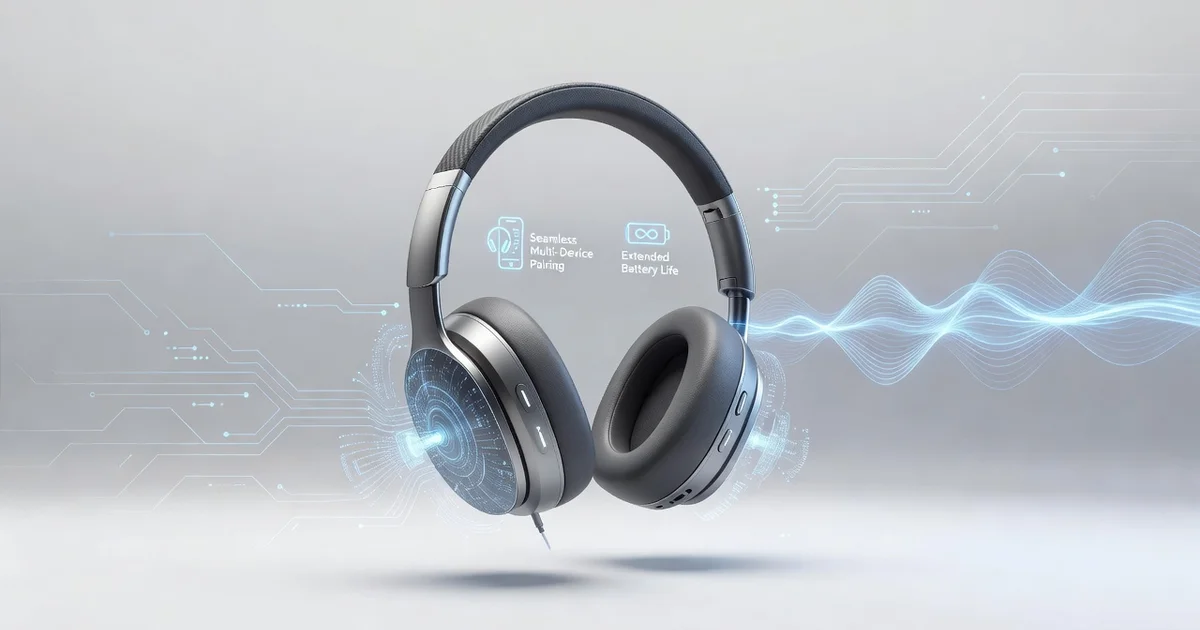
Wireless headphones have evolved from a convenience into an essential part of daily life, and the next wave of innovation is arriving fast. Understanding the future of wireless headphone technology helps you decide what to buy now and what to expect next.
In this article, we break down the key trends shaping tomorrow’s audio gear — from lossless streaming and smarter noise cancellation to longer battery life and AI-driven features. You’ll get clear, practical insights to help you choose headphones that stay useful for years.
Introduction
Wireless headphones have moved from a niche convenience to a daily essential for millions of people. Whether you are commuting, working out, taking calls, or simply relaxing, the odds are high that a pair of wireless earbuds or over-ear headphones is within arm’s reach. But the technology is changing fast. Battery life is stretching longer, connectivity is becoming more stable, and features that once seemed futuristic—like adaptive noise cancellation, spatial audio, and real-time translation—are now appearing in mainstream products.
This article explores The Future of Wireless Headphone Technology with clear, practical guidance. You will learn the core concepts that drive wireless audio, how to separate marketing hype from meaningful improvements, and how to make smart decisions today that will serve you well as the technology evolves. Understanding the fundamentals of The Future of Wireless Headphone Technology helps you make informed decisions, whether you are buying your first pair or upgrading an aging set.
The pace of change can feel overwhelming. New codecs, new Bluetooth versions, new battery chemistries—each promises a better experience. Yet the principles behind good wireless audio remain surprisingly stable. By focusing on those principles, you can cut through the noise and choose devices that actually fit your life. Reliable information and consistent habits lead to better long-term outcomes, and that holds true whether you are managing a headphone budget or simply trying to get the most from the gear you already own.
Key Concepts
Before you can evaluate any wireless headphone, you need a working vocabulary. The terms below appear in nearly every product listing, and understanding them will immediately improve your ability to compare options.
Bluetooth versions and codecs
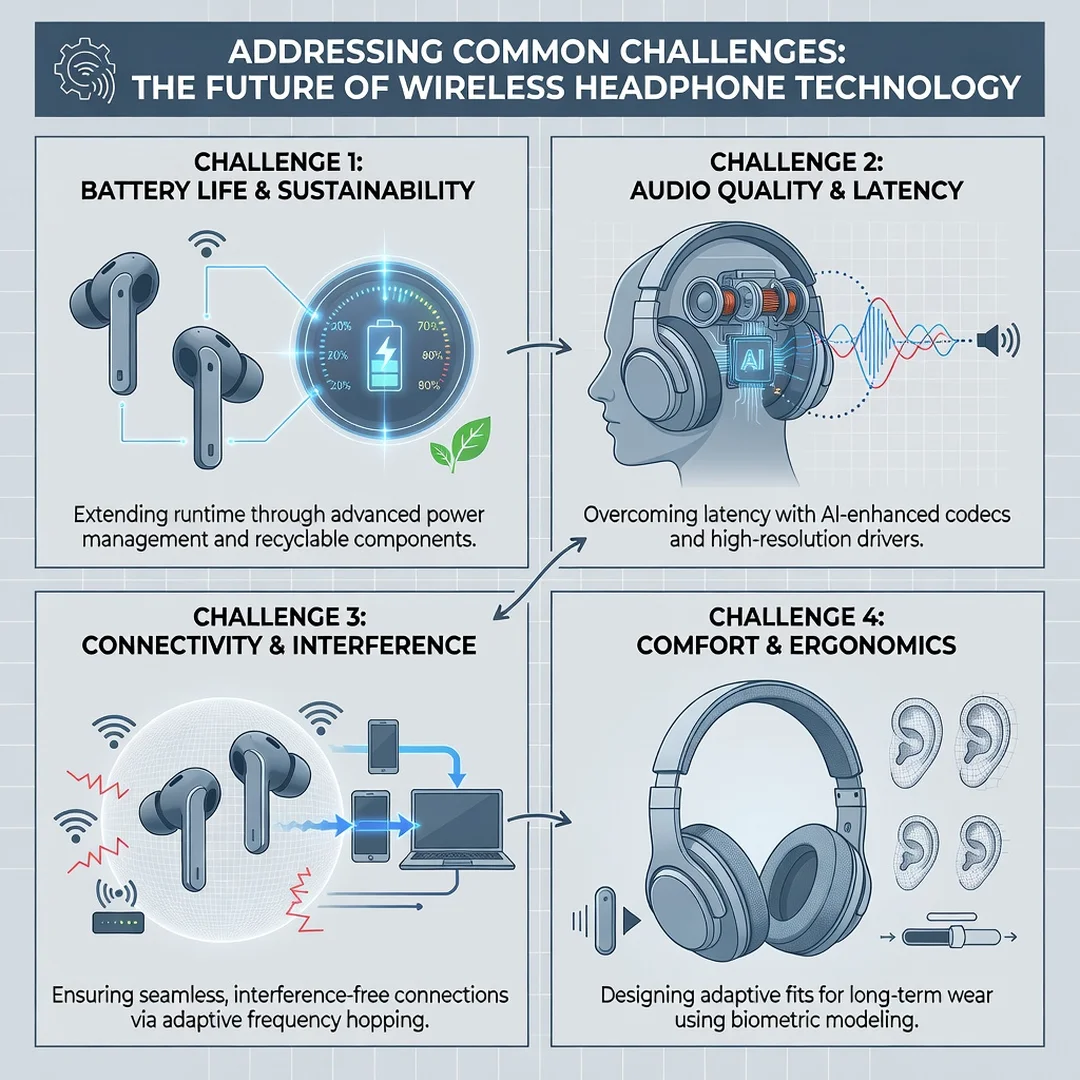
Bluetooth is the radio technology that connects your headphones to your phone, laptop, or tablet. Newer versions—such as Bluetooth 5.0, 5.2, and 5.3—generally offer better range, lower power consumption, and more stable connections. But the version number is only part of the story. The codec, which is the method used to compress and transmit audio, has a bigger impact on sound quality and latency.
- SBC is the mandatory baseline codec. It works everywhere but offers modest quality.
- AAC performs well on Apple devices and is widely supported.
- aptX and its variants (aptX HD, aptX Adaptive) are common on Android phones and prioritize lower latency and higher fidelity.
- LDAC is Sony’s high-resolution codec, capable of transmitting more data for richer sound.
The key takeaway: your headphones and your source device both need to support the same codec to benefit from it. Buying headphones with LDAC is pointless if your phone only supports SBC.
Active noise cancellation (ANC)
ANC uses tiny microphones to sample ambient sound and then generates opposing sound waves to cancel it out. It is most effective on steady, low-frequency noise such as airplane engines, air conditioners, or train rumble. It is less effective on sudden sounds like a door slamming or a baby crying. Modern ANC systems are adaptive, meaning they adjust in real time based on your environment and even the fit of the headphones on your head.
Battery life and charging
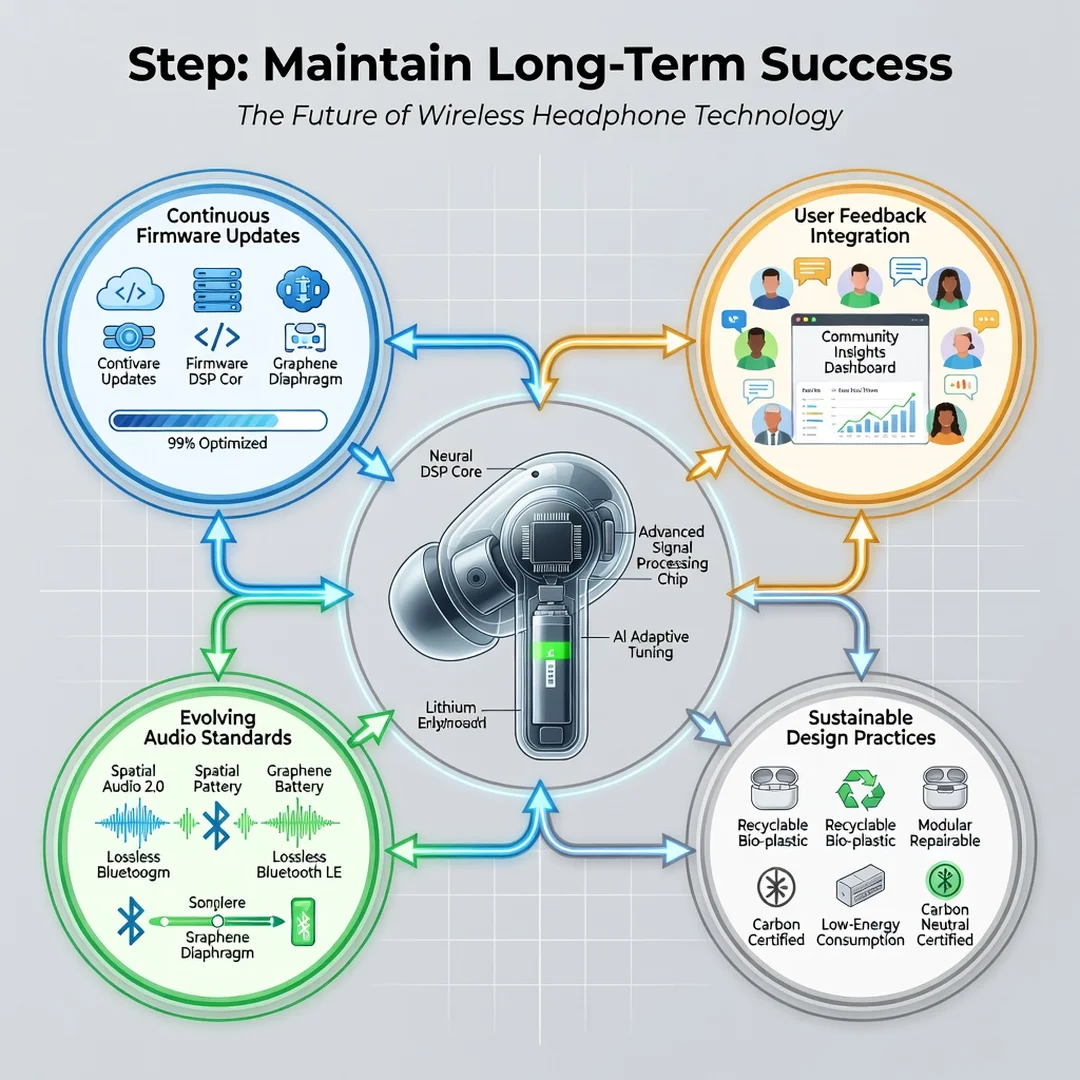
Battery life is usually quoted in hours of playback. Real-world performance depends on volume, ANC usage, and codec. Fast charging has become standard: a short ten-minute charge often yields several hours of listening. Wireless charging cases are increasingly common for earbuds. The future is moving toward more efficient chips and new battery chemistries that could eventually deliver multi-day use on a single charge.
Spatial audio and head tracking
Spatial audio creates a surround-sound effect that makes audio feel like it is coming from all around you rather than just left and right. Head tracking adjusts the sound field as you turn your head, which can make movies and games more immersive. This technology is still maturing, but it is already a headline feature in many premium models.
Deep Dive
To understand where wireless headphones are heading, it helps to look at the forces driving innovation. Three areas stand out: connectivity, intelligence, and power.
The connectivity race
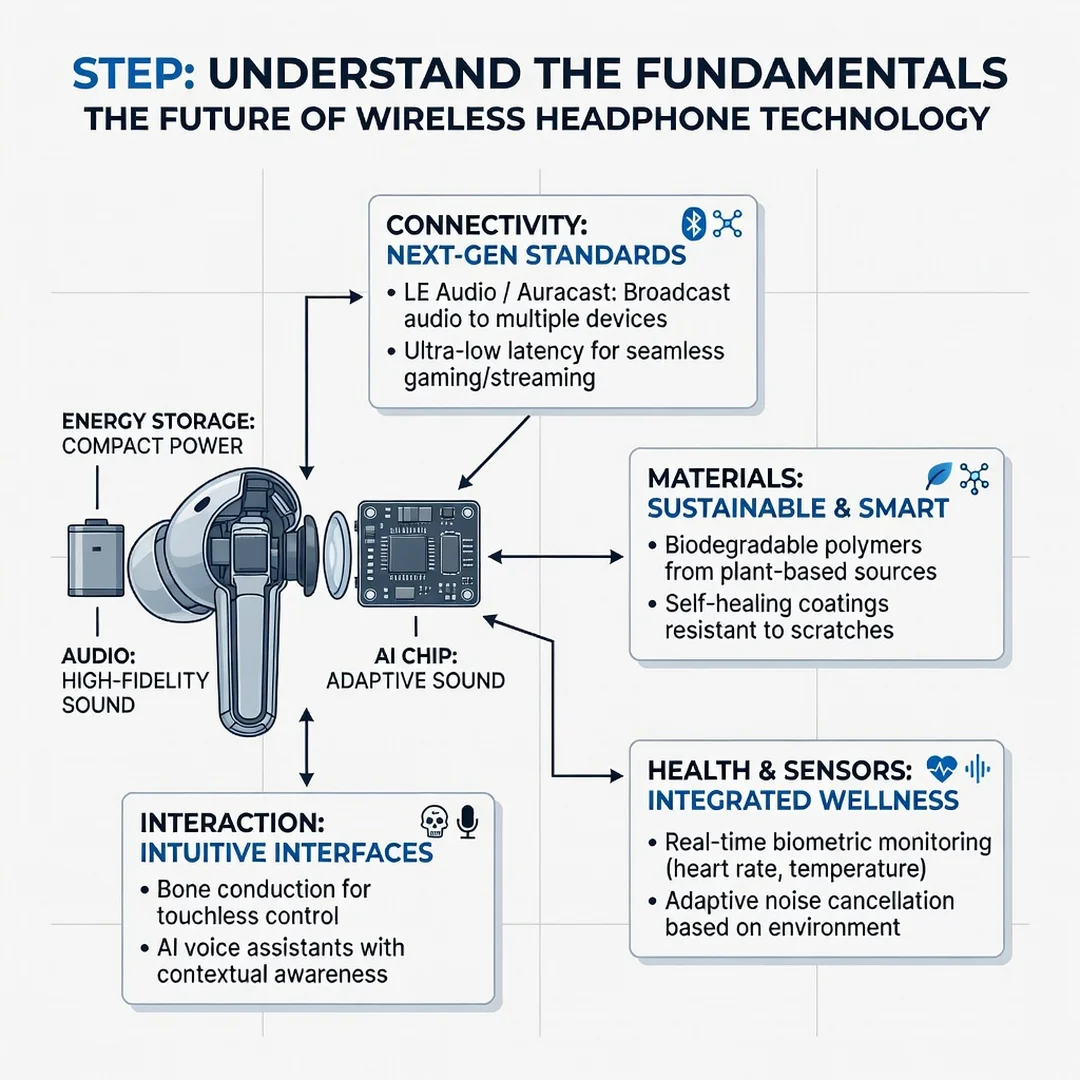
Bluetooth has served us well, but it has limits. Latency—the delay between audio leaving your device and reaching your ears—can still be noticeable during gaming or video editing. Interference in crowded spaces like airports or train stations can cause dropouts. The industry is addressing this in two ways. First, new Bluetooth versions and codecs are reducing latency and improving stability. Second, entirely new wireless standards are emerging, including ultra-wideband (UWB) and proprietary low-latency protocols for gaming.
In the near future, expect headphones to switch seamlessly between multiple devices, maintain rock-solid connections in dense environments, and support lossless audio over the air. Some of this is already possible with high-end gear, but it will become standard across price points.
Intelligence at the edge
The next generation of wireless headphones is not just about sound—it is about context. On-device artificial intelligence is enabling features that were impossible a few years ago. Real-time translation can turn one pair of earbuds into a conversational tool. Adaptive EQ can measure the acoustics of your ear canal and adjust the sound accordingly. Health sensors can monitor heart rate, temperature, and even posture.
This intelligence is moving from the cloud to the device itself. That means faster responses, better privacy, and features that work even without an internet connection. For you as a listener, the practical benefit is that your headphones will increasingly anticipate what you need rather than waiting for you to fiddle with settings.
The power problem
Battery life is the quiet constraint on every wireless feature. The more processing power, the more sensors, and the more advanced connectivity a headphone has, the more energy it consumes. Engineers are responding with more efficient chips, smarter power management, and new battery designs. Solid-state batteries, which are safer and more energy-dense than traditional lithium-ion, are on the horizon. When they arrive, expect a jump in playback time and faster charging.
In the meantime, your best strategy is to understand your own usage. If you listen for two hours a day, a ten-hour battery is plenty. If you wear headphones all day for work, you should prioritize longer battery life and comfortable design over marginal sound improvements.
Best Practices
Getting the most from wireless headphones is not just about buying the right model. It is about how you use and maintain them. The following practices will help you protect your investment and enjoy better performance.
- Match codecs to your devices. Check which codecs your phone and computer support before buying. This single step prevents disappointment.
- Keep firmware updated. Manufacturers often release updates that improve connectivity, battery life, and sound quality. Enable automatic updates if possible.
- Clean your headphones regularly. Earwax, dust, and sweat can clog mesh filters and degrade sound. A soft brush and a dry cloth are usually enough.
- Store them properly. Use the case when possible. Avoid leaving headphones in extreme heat or direct sunlight, which can damage batteries.
- Manage volume levels. Prolonged exposure to high volume damages hearing. Many headphones include volume-limiting features—use them.
- Test ANC in real environments. Noise cancellation varies by situation. If possible, try before you buy or purchase from a retailer with a good return policy.
Reliable information and consistent habits lead to better long-term outcomes. A few minutes of care each week can extend the life of your headphones by years.
Step-by-Step Guide to Choosing and Using Wireless Headphones
The following steps apply whether you are buying your first pair or upgrading. They are designed to be practical and sequential.
Step 1: Understand the fundamentals
Review the key concepts above. Know the difference between Bluetooth versions and codecs. Understand what ANC can and cannot do. Learn how battery life is measured. This foundation will help you read product specs with a critical eye and avoid paying for features you do not need.
Step 2: Assess your starting point
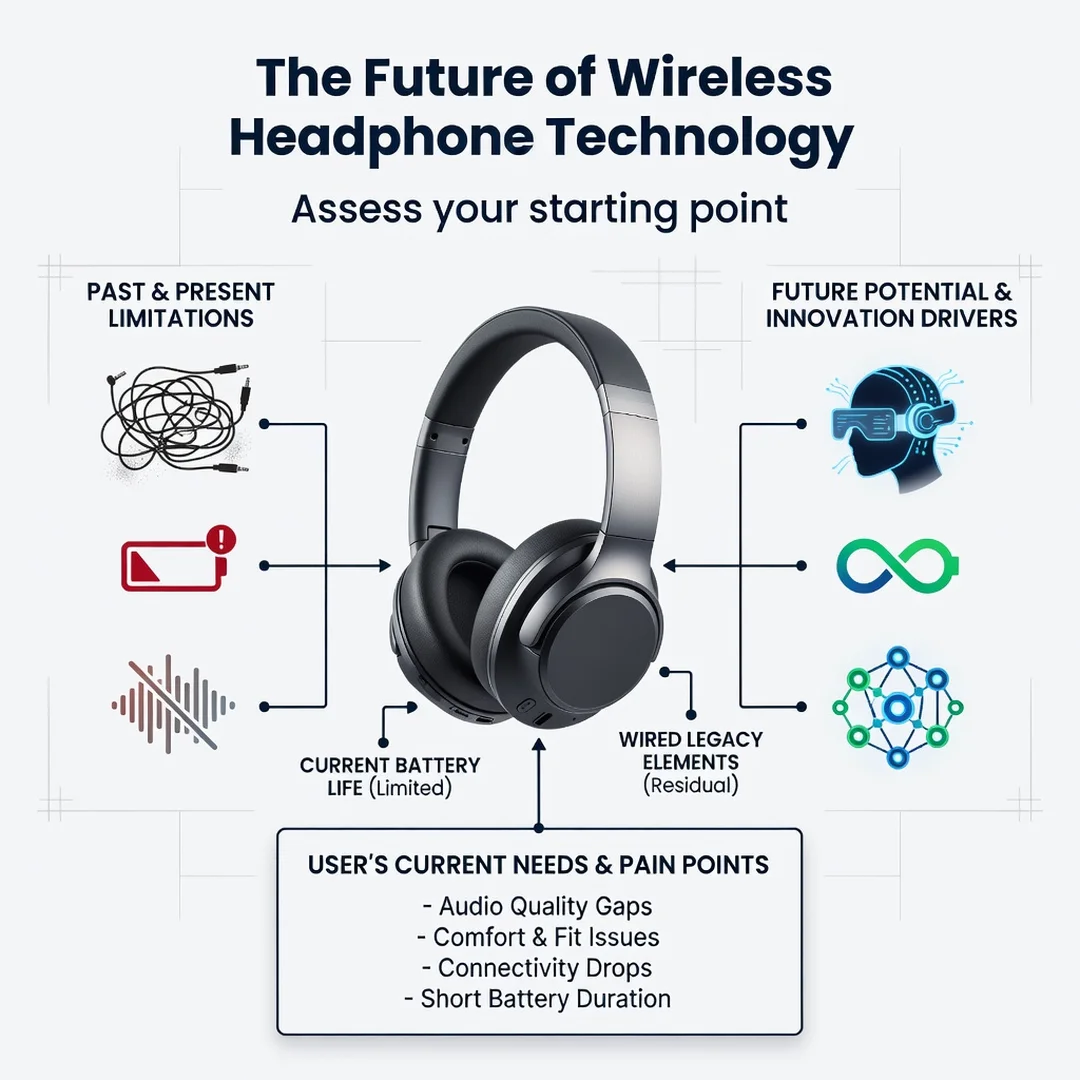
Take stock of what you already own and how you use it. Do you need earbuds for the gym or over-ear headphones for focused work? Which devices will you connect to? What codecs do they support? What bothers you about your current headphones—fit, battery, sound, or connectivity? Write down your answers. This is your baseline.
Step 3: Set clear goals
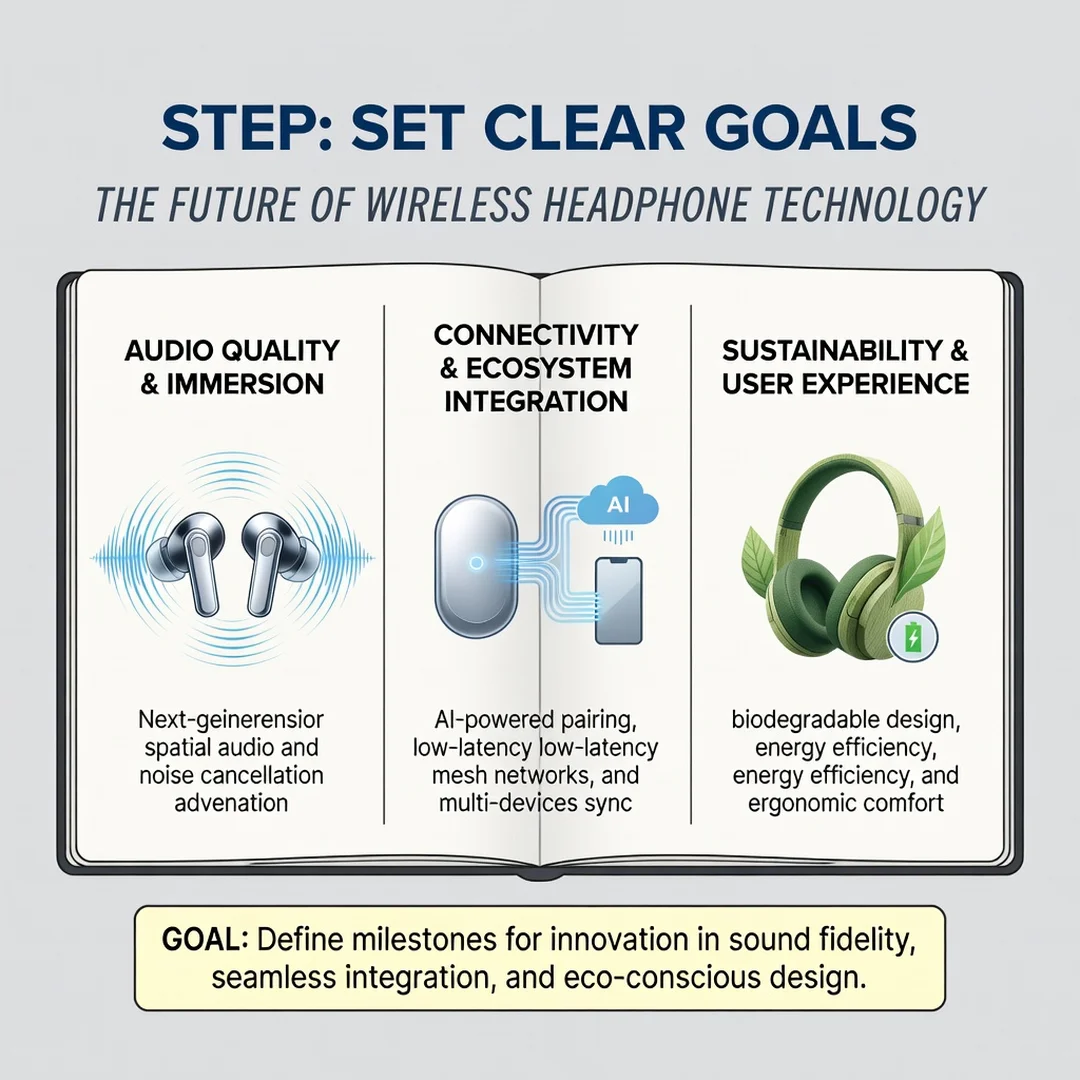
Define what success looks like. A commuter might prioritize ANC and battery life. A gamer might prioritize low latency. An audiophile might prioritize high-resolution codecs and sound quality. Set a budget and stick to it. Goals turn a vague desire into a concrete shopping list.

Step 4: Gather necessary resources
Collect the information you need. Read professional reviews, not just customer ratings. Watch video reviews that demonstrate real-world performance. Check return policies. If possible, visit a store to try on different models. Comfort and fit cannot be judged from a spec sheet.
Step 5: Apply the core methods
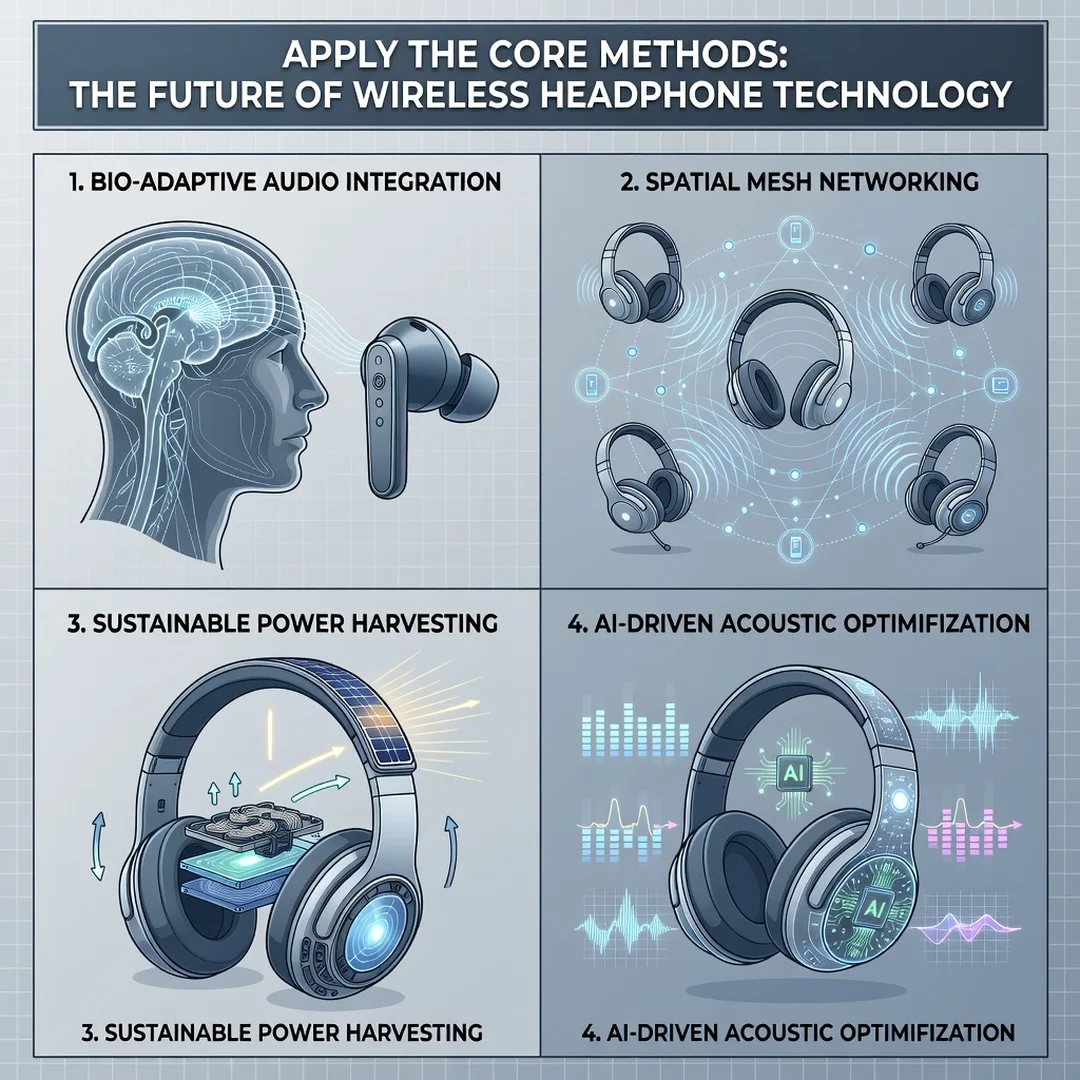
Make your purchase and set up your headphones properly. Update the firmware. Install the companion app if one exists. Adjust the EQ to your preference. Test the connection in different environments. If you are using ANC, experiment with the different modes. Give yourself a week to adapt to the fit and sound.
Step 6: Monitor your progress
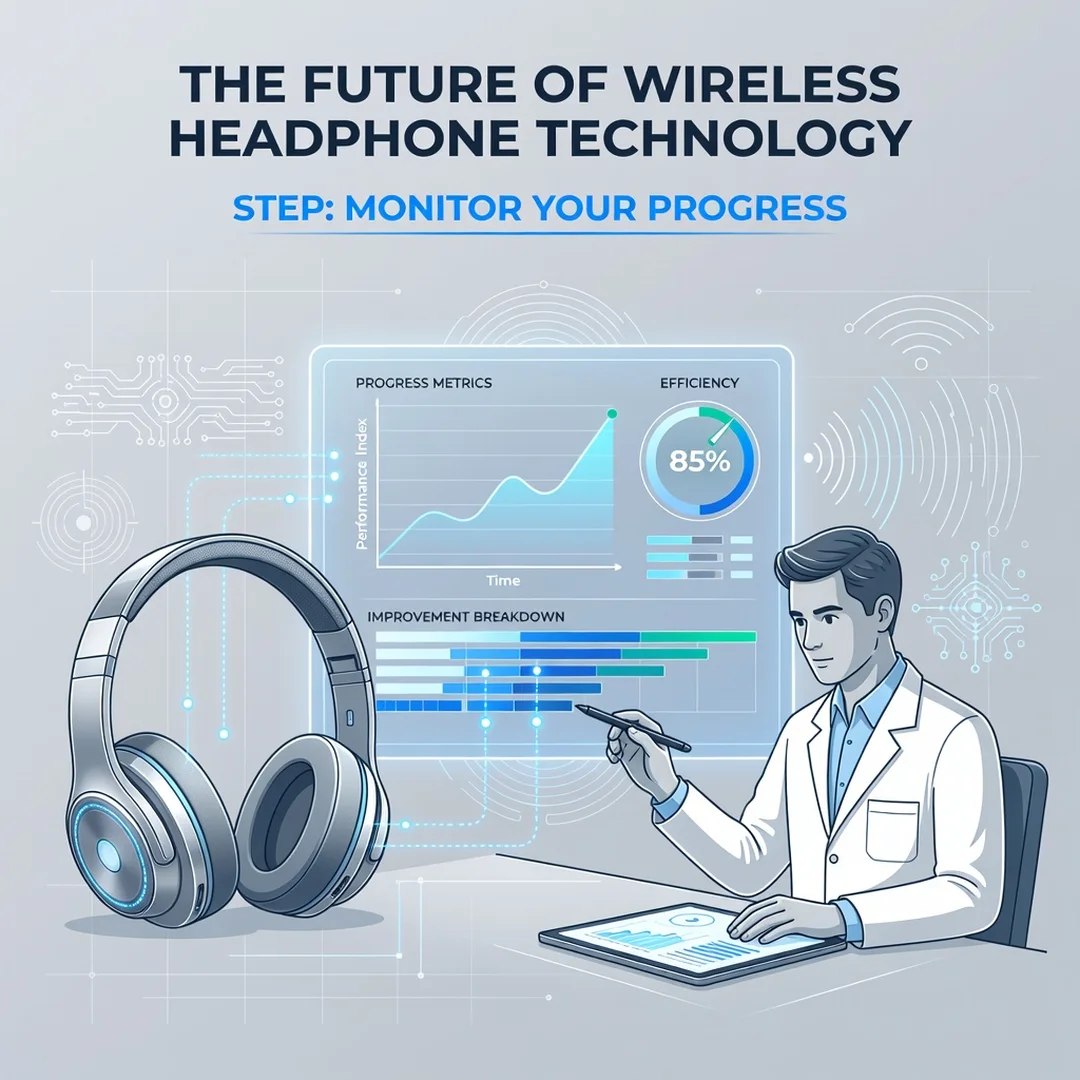
After a few weeks, evaluate your choice. Is the battery life meeting your expectations? Is the connection stable? Are you using the features you paid for? If something is not working, check for firmware updates or contact support. If the headphones are not right for you, return them within the return window. Monitoring ensures you learn from the experience and make even better choices next time.
FAQ
What should I know about The Future of Wireless Headphone Technology?
The most important thing to know is that the fundamentals matter more than the hype. Bluetooth versions, codecs, battery life, and ANC performance are the core factors that determine your experience. The future will bring better connectivity, more on-device intelligence, and longer battery life, but these improvements will build on the same principles. If you understand those principles, you can evaluate any new product with confidence. You do not need to chase every new release. Instead, focus on what solves a real problem for you—whether that is noise cancellation on your commute, a.
You now have a solid foundation for The Future of Wireless Headphone Technology. Apply the best practices above and revisit this guide as your needs evolve.